I know, it's been a long time since I said I'd be back soon.... But here I am, with lots of ideas and more posts in the works.
First, I just have to tell you about Maya Wegerif. I learned about her poetry thanks to an article by Chambi Chachage on “The Dar es Salaam Renaissance” in Pambazuka News (see my Nov. 21 post for an overview of Pambazuka News). Chachage writes about the cultural movement taking place in Dar that’s giving rise to a new social consciousness, and Wegerif is one of the artists profiled.
Maya the Poet is from South Africa, and has lived in Tanzania and the United States. Her poetry is amazing – clever and profound. She writes about political, social, feminist, technological and personal issues. You can find her poems and spoken word performances at her website (and the earlier http://mayawegerif.blogspot.com/) and on YouTube.
I couldn’t resist posting her TEDxDar performance of “Who Tells Our Stories.” It gets right at the heart of one of this blog’s themes -- understanding how we choose to perceive “Africa” and “Africans” and why we need to think critically about who writes and tells Africa’s stories. And, borrowing from Maya the Poet's much more convincing words -- hear the lion speak.
(You can find the words to the poem at http://mayawegerif.blogspot.com/).
Showing posts with label poetry. Show all posts
Showing posts with label poetry. Show all posts
Monday, May 9, 2011

Saturday, December 4, 2010
The concept of Africa
 |
| Pius Adesanmi / Photo via http://www.carleton.ca/ENGLISH/gradstudies/index.html |
If you’re trying to understand "Africa," you need to have a look at the work of Pius Adesanmi.
Pius Adesanmi is a Nigerian writer of poetry, creative non-fiction, and academic works. He teaches African literature and culture at Ottawa’s Carleton University.
Adesanmi is no stranger to awards: his poetry collection The Wayfarer and Other Poems won the Association of Nigerian Authors Poetry Prize in 2001. But in September 2010, he received the inaugural Penguin Prize for African Writing in the Non-Fiction category for his manuscript, You’re Not a Country, Africa!
 |
| Penguin Books cover photo |
You’re Not a Country, Africa! is a collection of essays inspired by experiences that have caused Adesanmi to reflect on what "Africa" means, after living in the West for 15 years and travelling through 35 African countries. For example, he tells the story of being in a bank in Canada while an elderly woman was chatting unhurriedly with the teller. People in line were impatient and soon Adesanmi, having been socialised to wait for elders, was the only person left behind her. He listened to her explaining that she preferred banking in person to internet banking. "She was speaking English, but I was hearing my language; I was transported back home, in my village, and listening to one of the core philosophies of Yoruba civilisation being articulated by a Canadian woman possibly in her eighties," Adesanmi recalls, referring to a Yoruba proverb that the face is the abode of human discourse. This incident led to an essay on respect for age, communication, and traits that are not so much "African" as human.
You’re Not a Country, Africa! will be released in June 2011. Adesanmi is working on a novel as well as a second non-fiction book with the working title of "The Habit of Underdevelopment." In it Adesanmi explores the discourse and politics of development, particularly "the aid/charity/development nexus" that fixates on providing for "lack" while ignoring cultural dynamics.
Adesanmi’s social and political commentary and creative non-fiction also appear online at The Zeleza Post, Sahara Reporters and Nigerian Village Square. See, for example, his poetic and compelling reflection in The Zeleza Post on his father and grandfather in Nigerian society.
Pius Adesanmi is someone to listen to, for his insights on identity, politics, cultures, and humanity, and his command of language. His academic work is also worth knowing about -- so I'll write about it in tomorrow's post.
Friday, December 3, 2010
Poetry and then some
I’m overwhelmed by the wealth and breadth of poetry coming out of Sub-Saharan Africa. There’s much to explore, but in today’s post I thought I’d mention the Poetry Africa festival.
Poetry Africa is an international festival that takes place annually in Durban, South Africa. It’s now in its 14th year. Two months ago (October 4-9), 20 poets from 12 countries – including South Africa, Jamaica, Palestine, Australia, India, Uruguay, Italy and Senegal – performed their poetry. Associated events were held in Cape Town, Harare (Zimbabwe) and Blantyre (Malawi).
Here are three of the South African poets who participated:
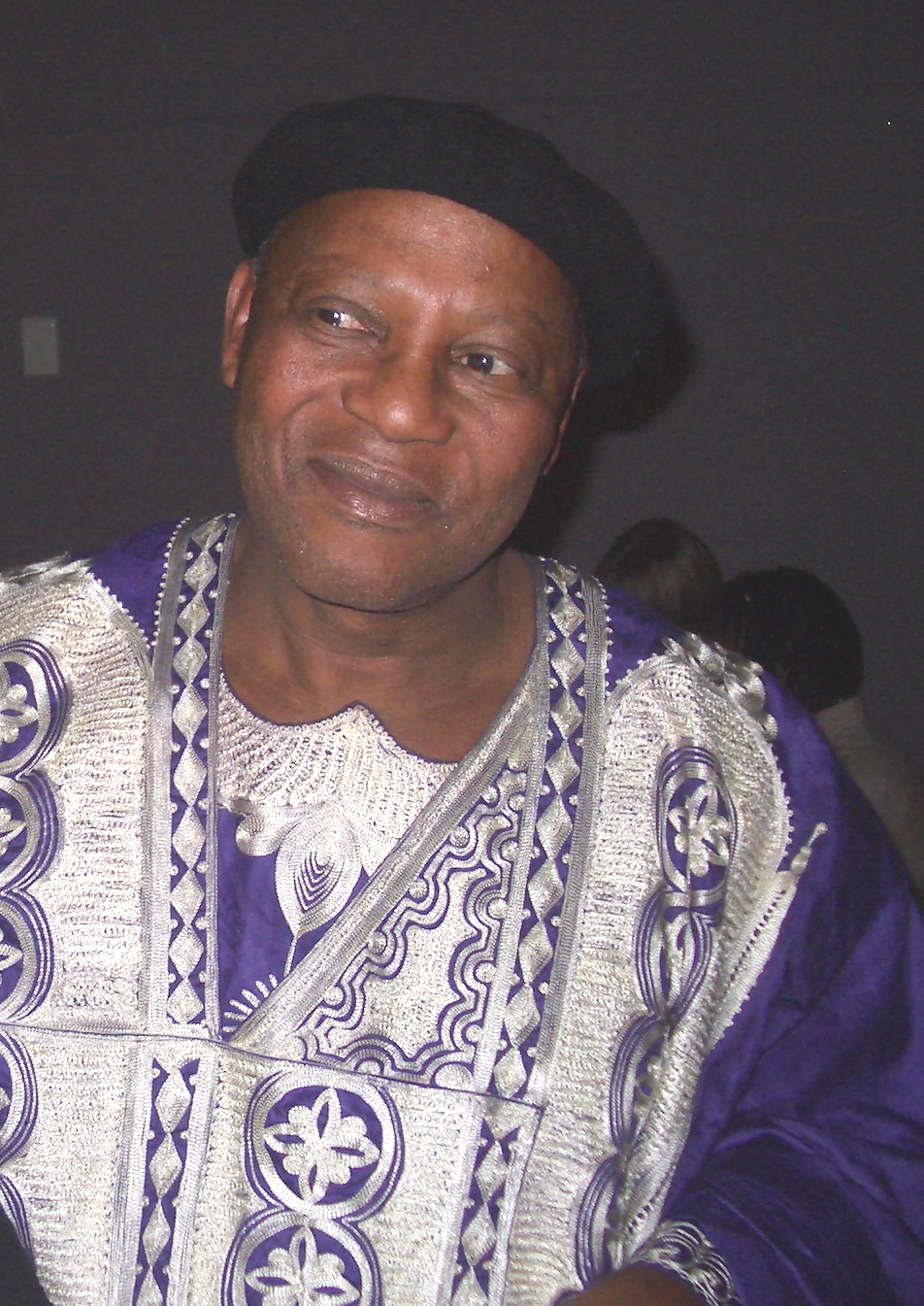
Gcina Mhlophe: a poet, storyteller, playwright, director, author, singer, actress and activist whose work addresses themes such as apartheid and patriarchy. She also created the group Zanendaba Storytellers as a means of revitalising storytelling traditions.
Pitika Ntuli: a poet, artist, sculptor and professor who uses myth and history in his poetry. He’s also played advisory roles on arts and culture, indigenous knowledge and traditional leadership. He’s even written his bio as a poem.
Lebogang Mashile: a poet, performer, actress, writer, columnist, TV presenter and producer. She sees poetry as a means of changing attitudes in post-apartheid South Africa; her website quotes her as saying, "The enemy isn’t really clear in the way it was before. It’s an incredibly sensitive, complicated struggle with many dimensions, but the site for that struggle is inside. ...The language of poetry comes from a place where that transformation has to begin, that sort of intuitive, creative, spiritual searching place that will be the fuel for any kind of transformation process." Mashile co-founded the Feel a Sistah! Spoken Word Collective, acted in the film Hotel Rwanda, and collaborated with choreographer Sylvia Glasser to create the contemporary dance performance Threads. She deals with issues that include women and violence, identity, and South African society and politics.
Here's a performance by Lebo Mashile earlier this year:
Lebo Mashile - Poet/ Writer/Producer from Thabo Thindi on Vimeo.
The Poetry Africa Festival is organised by the University of Kwazulu-Natal’s Centre for Creative Arts. The Centre also hosts the Time of the Writer festival, the Durban International Film Festival, and the Jomba! Contemporary Dance Festival.
Poetry Africa is an international festival that takes place annually in Durban, South Africa. It’s now in its 14th year. Two months ago (October 4-9), 20 poets from 12 countries – including South Africa, Jamaica, Palestine, Australia, India, Uruguay, Italy and Senegal – performed their poetry. Associated events were held in Cape Town, Harare (Zimbabwe) and Blantyre (Malawi).
Here are three of the South African poets who participated:
 |
| Gcina Mhlope / Photo courtesy Poetry Africa |
 |
| Pitika Ntuli / Photo courtesy Poetry Africa |
 |
| Lebo Mashile / Photo courtesy http://www.lebomashile.com/fanclub/ |
Here's a performance by Lebo Mashile earlier this year:
Lebo Mashile - Poet/ Writer/Producer from Thabo Thindi on Vimeo.
The Poetry Africa Festival is organised by the University of Kwazulu-Natal’s Centre for Creative Arts. The Centre also hosts the Time of the Writer festival, the Durban International Film Festival, and the Jomba! Contemporary Dance Festival.
Sunday, November 28, 2010
"thoughts change"
I wanted to feature a poet in today's post – but when it came to choosing someone, well, it wasn’t easy.
I decided to put the spotlight on Njeri Wangari. She’s a Kenyan poet and performer. She’s also a promoter of poetry and other art forms, a blogger and an IT and social media specialist.
Her blog is Kenyanpoet – A Kenyan Artistic Space. She started Kenyanpoet as a place to publish her own poetry, but also offers it as a venue for other Kenyan poets to be published online. As well as poetry, her site features music and musicians, artists, art events, poetry venues, theatre, reviews, guides to spoken word and poetry performing, and more.

Her own poetry covers a wide range of topics, from culture and identity to human rights, gender, poverty, technology and day-to-day life. She regularly performs her poems, but a volume of them has been published as Mines & Mind Fields: My Spoken Words. Her poems are in English, Kiswahili, Sheng and Gĩkũyũ. She's been writing poetry since 2004 and first performed in 2007.
Wangari also writes for Global Voices Online. There she's written about, for example, African poems written for 2009 World AIDS Day, and Nairobi as a hub for technology events. Her articles also appear at Conversations for A Better World.
Here she performs in Nairobi in September:
I decided to put the spotlight on Njeri Wangari. She’s a Kenyan poet and performer. She’s also a promoter of poetry and other art forms, a blogger and an IT and social media specialist.
Her blog is Kenyanpoet – A Kenyan Artistic Space. She started Kenyanpoet as a place to publish her own poetry, but also offers it as a venue for other Kenyan poets to be published online. As well as poetry, her site features music and musicians, artists, art events, poetry venues, theatre, reviews, guides to spoken word and poetry performing, and more.

Her own poetry covers a wide range of topics, from culture and identity to human rights, gender, poverty, technology and day-to-day life. She regularly performs her poems, but a volume of them has been published as Mines & Mind Fields: My Spoken Words. Her poems are in English, Kiswahili, Sheng and Gĩkũyũ. She's been writing poetry since 2004 and first performed in 2007.
Wangari also writes for Global Voices Online. There she's written about, for example, African poems written for 2009 World AIDS Day, and Nairobi as a hub for technology events. Her articles also appear at Conversations for A Better World.
Here she performs in Nairobi in September:
Subscribe to:
Posts (Atom)